
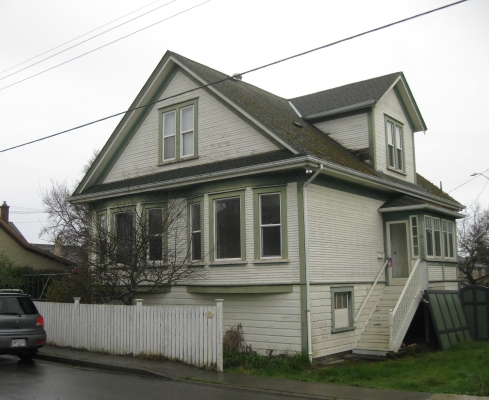
Photo: Davyd McMinn, 2026
ARCHITECTURE:
Located north of Dallas Road, south of Niagara Street and west of Menzies Street in the James Bay neighbourhood of Victoria, B.C., the Lewis Street Heritage Conservation Area is a cluster of fifteen one-and-a-half to two-and-a-half storey single-detached and converted homes. The area includes Lewis Park and is connected to Menzies Street and Luxton Street via three footpaths including Brotchy Lane.
The Lewis Street Heritage Conservation Area has historical significance as an intact example of the gradual development of Victoria’s neighbourhoods in the late 19th and early 20th centuries. The layouts of the two subdivision phases are still evident on the street, with the lot proportions and rhythm largely unchanged since the Lewis and Playfair, Playfair and Cramer subdivisions were laid out in the 1890s and 1911 respectively. These subdivisions replaced the Lewis and Gladys Villa estates, which in turn had replaced the Hudson’s Bay Company’s Beckley Farm. This is emblematic of the progression of development in Victoria at the time, therefore contributing to Lewis Street’s historic value. The street also has architectural significance as a relatively intact streetscape of homes built in the popular styles of the early 20th century, including Queen Anne, Colonial Bungalow and a number of interpretations of the Arts and Crafts movement. Despite many different styles, the properties within the Heritage Conservation Area share a variety of common features such as scale, siting and massing, as well as window assemblies, recessed entries and decorative features.
Character-Defining Elements
The elements that define the character of the historic place include its:
– Relatively small setbacks from the front property line of 5 metres or less
– One-and-a-half to two-and-a-half storey height
– Peaked roofs
– Generous proportion of wood framed glazing on front façades
– Raised basements
– Spacious covered front porches
– Wood siding
– Low fencing along front property lines
Features emblematic of popular architectural styles of the first three decades of the 20th century, including but not limited to:
– Angled and box bays
– Sash, three-part and multi-light wood windows
– Corbelled brick chimneys
– Decorative columns
– Gables and dormers with wood windows
ORIGINAL OCCUPANTS:
-more research to follow